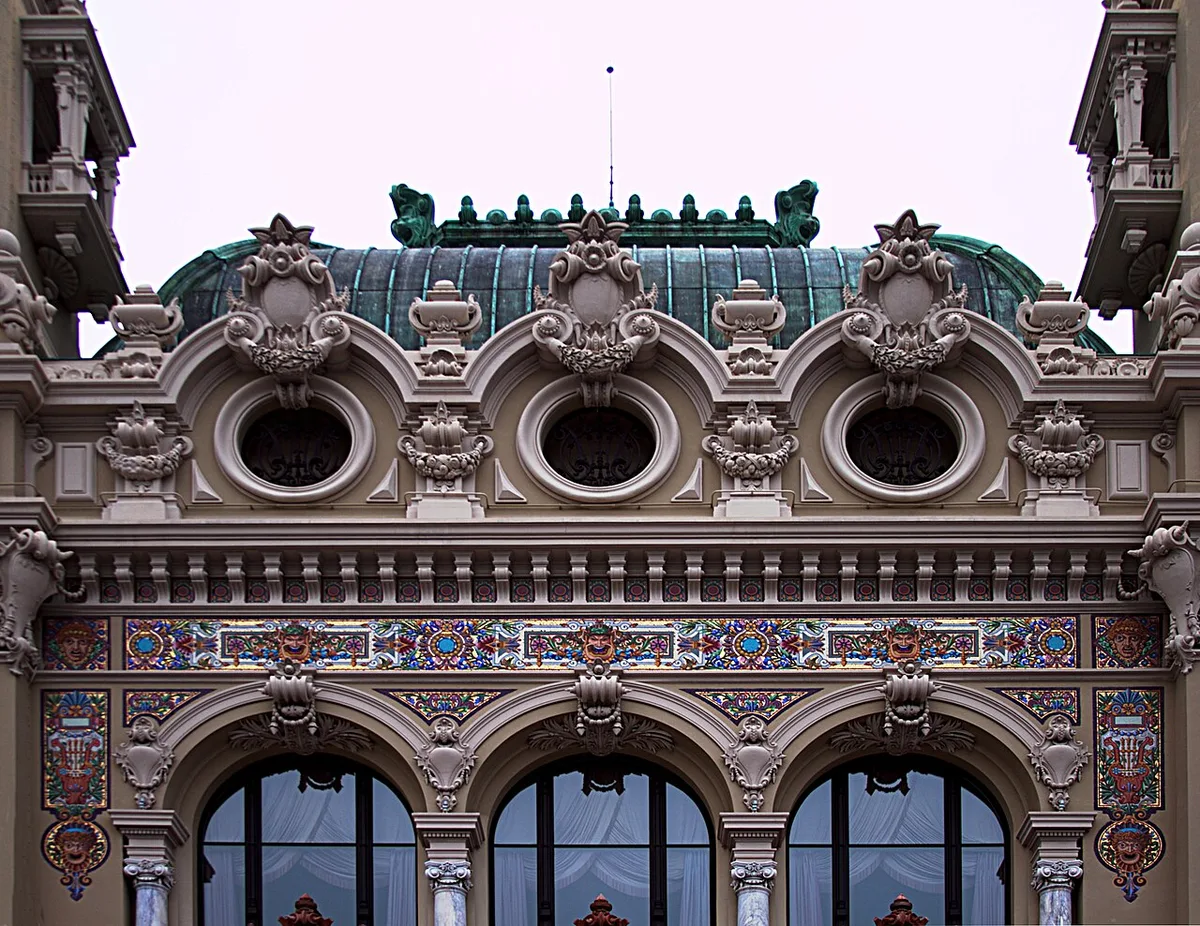
Photo: José Luiz · CC BY-SA 3.0 · Wikimedia Commons
Monte Carlo: architecture first
The Casino de Monte-Carlo was designed by Charles Garnier, the same architect as the Paris opera house, and it shows: the atrium, the marble, the ceiling. Much of the building is open to visitors who never place a bet, and the surrounding square is a public space. The dress code is real and the entry fee is modest. Go for the room, not the tables.
Las Vegas: the floor as a machine
Nothing on the Strip is accidental. Floors are laid out so that every route to a lift, a restaurant or an exit passes the machines. There are famously few clocks and few windows. Whatever you think of that, it is a masterclass in how buildings direct human movement, and worth an hour of attention even if you do not gamble.
Macau: scale you have to see
Macau’s gaming revenue has for years exceeded that of Las Vegas several times over, and the Cotai strip was built almost entirely in the past two decades. The interesting part for a visitor is the contrast: fifteen minutes away sits a UNESCO-listed old town of Portuguese churches and Cantonese temples that most gaming visitors never walk through.
Knowing what you are looking at
If you do sit down, it helps to understand the mathematics that all three buildings are built on. Every game carries a fixed built-in margin, and it differs enormously between them — which is why the loudest, most colourful machines are rarely the ones with the best odds. A comparison of the house edge across common games lays those percentages side by side, and it explains the layout of the floor better than any guidebook.
For the wider picture — how the games work, where the odds come from, and why certain betting systems keep circulating despite not working — an educational site that explains how casino games are built covers the ground without selling anything. Read it before you travel rather than after.
Practical notes
Photography is restricted on most gaming floors. Monte Carlo enforces a jacket rule in the private rooms. Macau requires a passport at the door. And in all three cities, the exchange rate at the cage is worse than at a bank — a small detail that costs travellers more than they realise.
Set a fixed amount before you walk in, in cash, and leave the cards in the room. That single habit turns a gaming floor into what it should be for a traveller: an evening out, not a variable expense.